Talking Across Borders (IL)
Registration Info
Registration is not Required
About this event
 |
This exhibition showcases a long-term collaboration between a community organization in Chile—Mesa Ciudadana de Patrimonio, Cultura y Turismo de Lota—and scholar Magdalena Novoa. The project uses the Chilean textile craft called arpillera made by women in Chile’s southern coal basin region of Biobio to create counter-narratives of their cities’ urban history from women’s perspectives and to influence historical preservation planning and policy.
Arpilleras are a radical feminist practice of storytelling and protest that became prominent in Chile during the Pinochet dictatorship (1973–1990) when women used them to denounce their relatives’ disappearances and political violence. Today, women experiencing marginalization continue to create arpilleras depicting poverty, gender violence, and survival strategies. The arpilleras have colorful stitching, applique, and embroidery; and they are created in group sessions where women share experiences, talking as they sew.
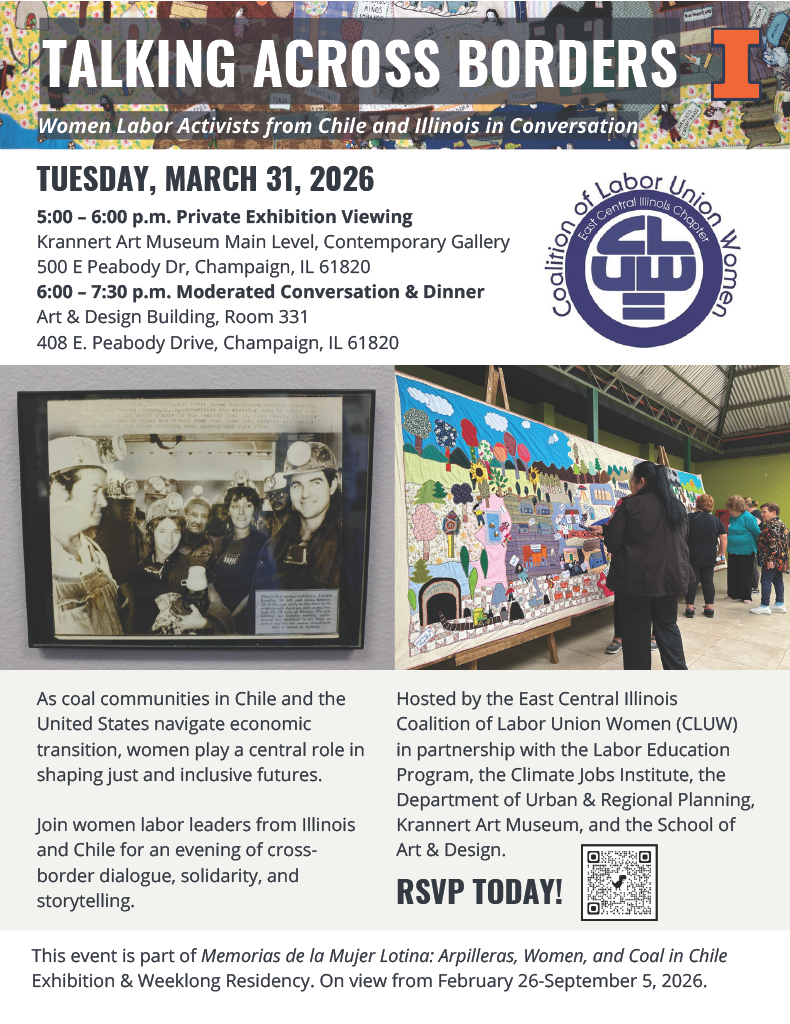
Featuring more than a dozen textiles and documentary footage contextualizing their significance, the exhibition will include a monumental sixteen-foot-long arpillera representing the city of Lota, made by fifty-two women aged 14 to 92. With Lota’s nomination to the list of UNESCO World Heritage sites, this work has helped influence decisions about planning and preservation in their city by making visible how official heritage narratives have concealed women’s experiences of place. During this collaborative and performative cartography of memory, the women embarked on a process of co-producing knowledge in an accessible format for participants and the general public, facilitating a process of advocacy by participants themselves.
|
|
 Invalid Quantity