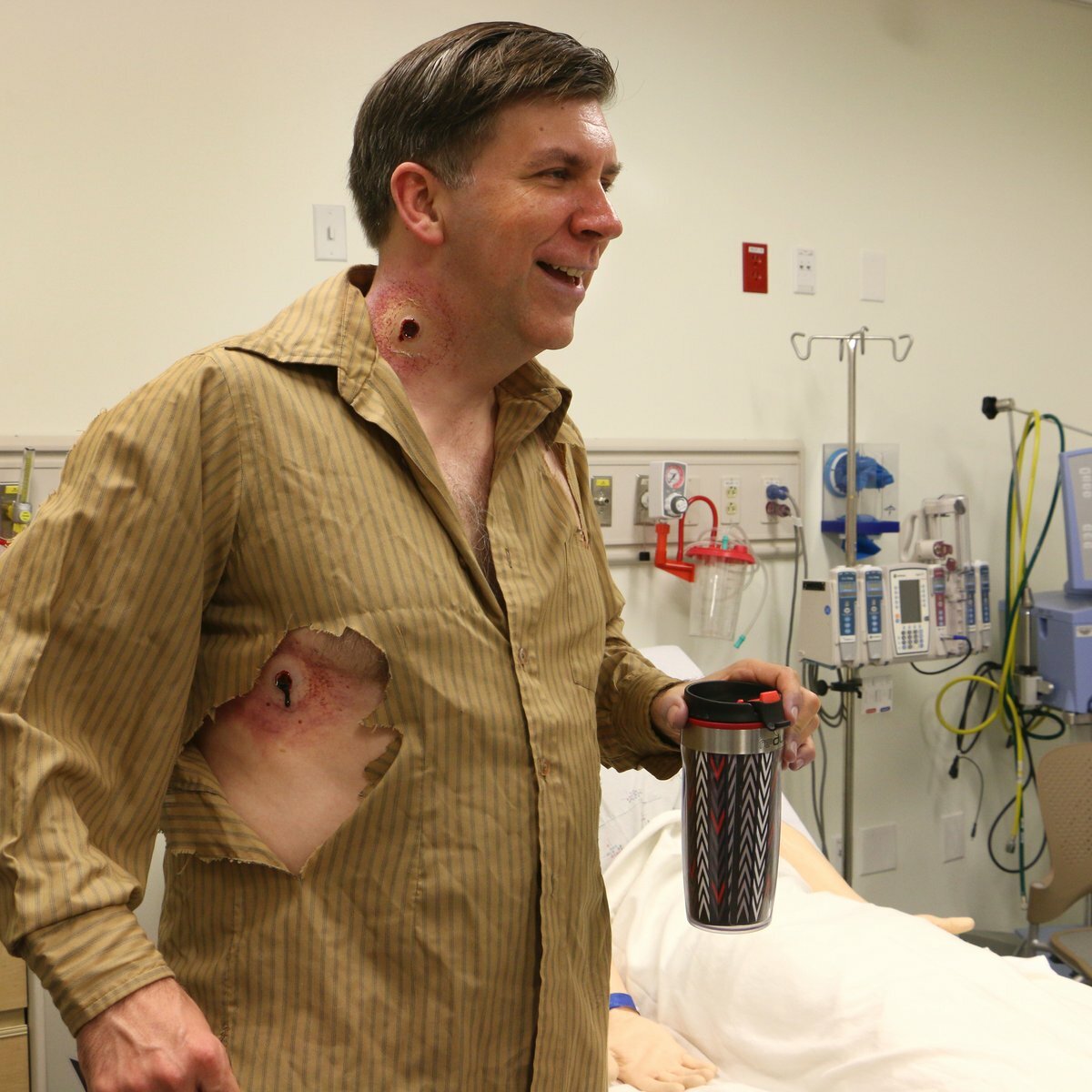
 They may arrive with stab wounds, gunshot injuries or other serious medical conditions. The injuries aren’t real—but the people portraying the patients are.
Simulated or Standardized Patients (SPs) are trained performers who portray patients in realistic medical scenarios. They learn case histories, simulate symptoms, respond to examinations and give learners feedback. Oregon Health & Science University specialists sometimes use “moulage”—makeup that creates convincing wounds—to make the encounters even more realistic.
SPs are the lifeblood of OHSU’s human simulation program, based in the Robertson Life Sciences Building and at four smaller sites across Oregon. Their work gives medical professionals a safe environment in which to practice before treating actual patients.
For decades, however, these skilled performers worked under precarious arrangements. Initially hired as independent contractors on a case-by-case basis, they became nonunion temporary employees when OHSU opened what is now the RLSB in 2014. Their pay rose from $15 to $20 an hour, and OHSU later created a higher-paid Senior Simulated Patient position.
In 2023, newly hired SP Program Manager Emma Vick—promoted from an AFSCME position—made bringing the SPs into the union a priority. After three years of negotiations, more than 100 performers at five sites across Oregon were added to the AFSCME Local 328 bargaining unit in mid-July. They join 25 full-time trainers, administrators and technicians in the Simulation Department.
Simulation Union Steward Brian Saville Allard is working with steward leadership and AFSCME staff to welcome the new members and educate them about annual raises, shift differentials, Weingarten rights and just-cause protections.
“That’s the power of union organizing,” said Allard. “More than 100 skilled performers now have better pay, stronger protections and a collective voice at work.”
Read more